
Who Is Liable in a Florida Truck Accident? Tampa Bay Guide



By Howard Merricks, Esq., Founding Senior Partner, Merricks Law Group · November 17, 2026
In a Florida truck accident, more than one party can be liable: the truck driver, the trucking company, and sometimes the freight broker, the cargo loader, a maintenance shop, or a parts manufacturer. Florida divides fault by percentage, so each party pays its own share of the harm it caused. That is why finding every responsible party matters. Trucking companies usually carry far more insurance than an everyday driver, and a claim that names only the driver can leave truck accident victims short on medical bills, lost wages, and long-term care.
Why truck accidents in Tampa Bay often involve more than one liable party
A car accident usually involves two drivers. A commercial truck accident can involve a whole chain of businesses: the motor carrier that hired the driver, the broker that booked the load, the shipper that packed it, and the shop that serviced the brakes. Any link in that chain can share the blame. In Tampa Bay, that chain runs through some of the busiest freight routes in Florida: I-75 through Pasco and Hillsborough, Interstate 4 toward Orlando, I-275 across the bay, and US-41 and US-301 through Land O’ Lakes, Lutz, and Riverview. Many of the semi-trucks and 18-wheelers on those roads cross state lines, which brings federal safety rules into play.
The truck driver
The driver can be liable for speeding, distracted driving, unsafe lane changes, impaired driving, or driving while exhausted. In practice, though, the driver is rarely the only target. When the driver was working for a carrier at the time, the company is often responsible for the driver’s on-the-job mistakes, and it is the company’s insurance that pays.
The trucking company
The trucking company can be responsible in two ways. It can answer for its employee driver’s negligence on the job, and it can be directly at fault for its own choices, such as hiring an unqualified driver, skipping drug and alcohol testing, ignoring a poor safety record, or pushing drivers past their legal hours. Florida’s commercial motor vehicle safety law (section 316.302) requires trucks in interstate commerce to follow the federal motor carrier safety regulations, and it sets limits for in-state drivers too, such as no more than 12 hours of driving after 10 hours off duty. Carriers must also carry real insurance: federal rules set a $750,000 minimum in liability coverage for for-hire trucks hauling general freight across state lines, and more for many hazardous loads.
The freight broker
Brokers match shippers with trucking companies, and for years they argued federal law shielded them from injury lawsuits. That changed on May 14, 2026, when the U.S. Supreme Court ruled unanimously in Montgomery v. Caribe Transport II that federal law does not block state-law claims that a broker negligently hired an unsafe carrier. If a broker chose a carrier with a poor safety rating or a record of violations, the broker may share responsibility. The ruling addressed interstate shipments, and a broker can still argue it acted reasonably, but this is now a real avenue that did not reliably exist in Florida before.
The shipper or cargo loader
Overloaded, unbalanced, or poorly secured cargo can shift in a turn, cause a rollover, or spill onto the road. When a separate company loaded the trailer, that company may be at fault for the way the load was packed or tied down.

Maintenance shops and parts manufacturers
Worn brakes, bald tires, and broken lights cause crashes. If an outside shop serviced the truck and missed a defect, the shop may be liable. If a part failed because of a design or manufacturing defect, a product liability claim against the manufacturer may apply.
Common causes of truck accidents
Each cause below can point to a different liable party:
- Driver fatigue and hours-of-service violations, often tied to delivery pressure from the carrier
- Distracted driving, including cell phone use behind the wheel
- Speeding and following too closely on interstates, where a loaded truck needs far more distance to stop
- Improperly loaded or unsecured cargo, which can point to the shipper or loader
- Brake and tire failures from skipped inspections or poor maintenance
- Wide right turns and blind spots, the “no-zones” around a big rig
- Jackknife, rollover, and underride crashes, which are often among the most serious
How Florida splits fault, and why missing a party costs you
Under Florida’s comparative fault law, the court enters judgment against each liable party based on its own percentage of fault, not for the whole amount. Your own share of fault, if any, reduces what you recover, and a person found more than 50% at fault for their own harm cannot recover anything. For example, say a jury finds $500,000 in damages and assigns fault this way: carrier 60%, broker 20%, you 20%. You could recover $400,000, with each party paying its own share. If the broker had never been named, its 20% share could simply go unpaid. That is the practical reason a thorough investigation matters.
What compensation may be available
Depending on the facts, a truck accident claim may include:
- Medical bills, past and future, including rehabilitation and long-term care
- Lost wages and lost earning ability
- Pain and suffering and emotional distress, which in Florida motor vehicle cases generally require an injury that meets the state’s serious injury threshold
- Property damage to your vehicle
- Wrongful death damages for families who lost a loved one
Punitive damages are possible only in rare cases involving extreme misconduct.
The evidence that proves who is liable
Truck cases are won on records the trucking company controls, and some of those records can be overwritten or discarded within months:
- Electronic logging device (ELD) data showing the driver’s hours
- The truck’s “black box” data on speed and braking
- The driver qualification file, drug and alcohol test results, and training records
- Inspection and maintenance logs
- The bill of lading and the broker-carrier contract
- The carrier’s federal safety rating and inspection history
What a truck accident attorney does for you
- Investigates the crash and sends preservation letters so key evidence is not lost.
- Identifies every liable party and every insurance policy that may apply.
- Handles the insurance company, so you are not pressured into a recorded statement or a quick, low offer.
- Documents your losses with medical records, bills, and wage information.
- Files a lawsuit if needed and prepares the case for trial when an insurer will not pay fair compensation.
How long you have to file
For most Florida truck accidents on or after March 24, 2023, you have Florida’s two-year deadline to file a negligence claim. If a loved one died, the same statute sets a two-year deadline for a wrongful death action. Two years goes quickly when you are recovering, and evidence fades long before that.
What to do next after a Florida truck accident
- Get medical care right away, even if you feel okay.
- Call 911 and make sure a crash report is made.
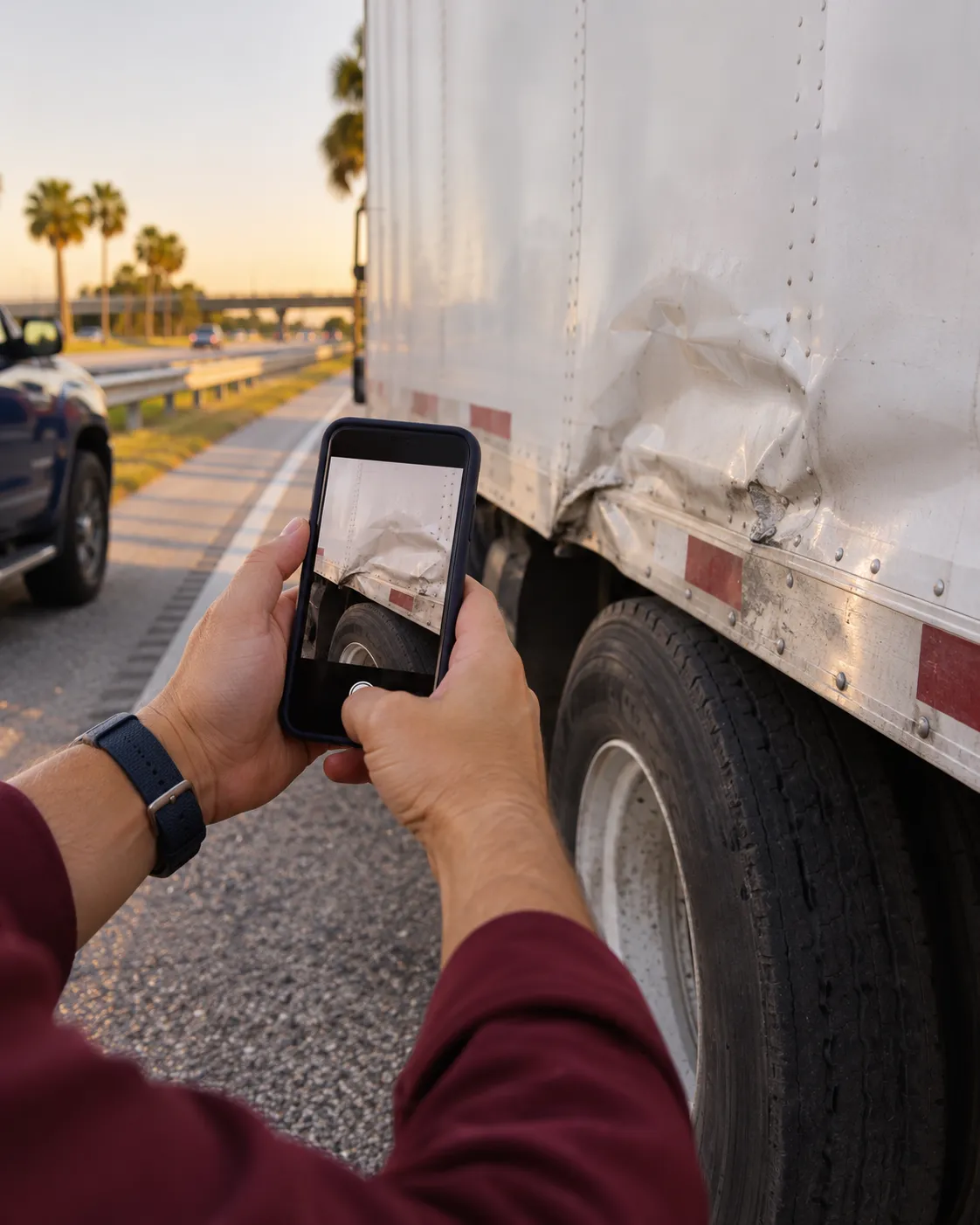
- If you can do it safely, photograph the truck, its DOT number, the trailer, the road, and your vehicle.
- Get the names of the driver, the trucking company, and any witnesses.
- Do not give a recorded statement to the trucking company’s insurer before you get legal advice.
- Talk to a truck accident attorney early, so driver logs and black box data can be preserved.
For a step-by-step checklist, read what to do after a truck accident in Tampa.
Talk to a Tampa truck accident attorney
You should not have to take on a trucking company and its insurers alone. Merricks Law Group is aggressive with insurance companies and personal with you, with attorneys who bring over 150 years of combined experience. We can help identify every party that may be responsible and fight for the full compensation you may be owed. Your consultation is free, and there are no fees or costs unless we win. Call (813) 226-3800, visit our truck accident practice page, or contact us online. Click or Call, That’s All!® Take Back Control of Your Life.®
FAQ
Can I sue the trucking company and not just the driver? Often, yes. A trucking company can be responsible for its employee driver’s mistakes on the job and for its own failures, such as negligent hiring or ignoring hours-of-service rules.
Can a freight broker be held responsible for a truck accident in Florida? It may be possible. In May 2026, the U.S. Supreme Court held that federal law does not bar state-law claims that a broker negligently hired an unsafe carrier for an interstate load. Whether a broker is liable depends on the facts.
What if I was partly at fault for the truck accident? You can still recover as long as you are not more than 50% at fault. Your compensation is reduced by your percentage of fault.
How long do I have to file a truck accident claim in Florida? For most crashes on or after March 24, 2023, you have two years to file a negligence lawsuit. Wrongful death claims also have a two-year deadline.
Disclaimer: This article is general information, not legal advice, and reading it does not create an attorney-client relationship. Every case is different. Contact an attorney about your specific situation.
Relatable Articles

How to Choose a Car Accident Lawyer in Tampa Bay: A Checklist You Can Actually Use

Florida’s Motorcycle Helmet Law: What It Means for Your Injury Claim

Wesley Chapel Slip and Fall Lawyer
